

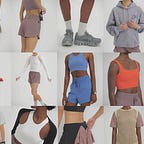

I sat down with Jessie Hyman, co-founder of Pruzan Running to talk about their upcoming Spring ‘26 line and to get a better understanding of the brand. “It’s strength, but soft. Adaptable, but ambitious.” That’s how Jessie Hyman describes Pruzan’s design language: femininity expressed through running. Not “at all costs.” Not “do whatever it takes.”
I read somewhere online recently that there are brands that design for a particular audience, and brands that design for themselves. Pruzan, Jessie told me, is the latter. When I first came across it, I was impressed with the vintage-inspired, yet modern layering mesh singlet. it felt like nothing else out there. More clubwear than running.
The full interview is available via audio, but below is an abridged version cut into a conversation format.
BTW the Pruzan archive sale is going on right now clearing out their previous seasons. The new line should be live by the time I post this.
Cole: You’re back after a bit of a hiatus. I heard there’s a new launch coming, thanks to Lee.
Jessie: I’m super excited about the spring launch. Pruzan’s been around now, we’re heading into our fourth birthday at the end of the year. I think this launch and this point in time is an unlock of maturity. There’s this slightly different approach we’re taking. I wouldn’t say it’s gonna feel like a complete rebrand or reshuffle or a massive overhaul. I think it’s just gonna feel like it’s turned in a direction slightly differently. And I feel really excited about that. It’s really authentic with how we feel as people, what feels most passionate to pursue, the positioning that feels the most authentic. It’s nice to have been brewing on this and making all the bits and pieces, and to know that we get to share it with the world next week. I feel super excited, a bit of that pre-race adrenaline vibe.
Cole: I get it. Excited and a little nervous, but not in a bad way. You’re just ready to do the thing, and you’re really proud of it and excited. Pruzan’s been around for a bit. Why did you start Pruzan in the first place?
Jessie: It’s not that long in the scheme of a business—established 2022. A lot of it has to do with my own personal background. I’ve been running for over 18 years. In the pandemic, when I had this big change in lifestyle, I wasn’t going to an office every day. I was thinking a lot more about how I want to dress when I’m not dressed business casual. I was really interested in style. I’d always been interested in style, but it unlocked this new avenue to explore it.
Within running, I was like, why am I still putting on highlighter, lemon yellow, poorly cut tank tops? I was still wearing stuff from high school, which is great in a lot of ways, but it didn’t really feel like it described myself.
I had just moved to London in 2020 and I was looking for community. I love running. I thought it’s a great avenue to meet more people who run and are passionate. But I don’t feel like myself in this space when I’m showing up wearing really ill-fitting, brightly colored, bizarrely patterned gear. It just didn’t feel like the most confident, most assured expression of myself. It just didn’t feel like me at all.
When I looked to what was in the space, the really big players were just not investing in apparel and you could feel it.
Cole: Totally. Everyone was footwear-led. The shoes are good, and then the running stuff not so much.
Jessie: On the big side, what really is the storytelling here? The focus felt like this is the super shoe era of the 2020s. The apparel just wasn’t getting much innovation. And also the lack of consistency. If you did fall in love, my favorite pair of shorts pre-Pruzan was this Nike pair of men’s shorts I got at the outlet store in Portland, Oregon. Never gonna see those again.
On the independent side, the challenger side, it just felt like a really masculine world. It felt like a world I wasn’t invited to participate in. I had big concerns about fit and function as a woman with hips and a bust. I’d had bad experiences trying out some of the product from that fit perspective. That was a lot of the genesis and the thinking behind it.
Together with my co-founder Lexy, who is an athlete with more of a dance background, played basketball growing up — we always bonded in college over this pair of men’s American Apparel swim trunks. I knew she’d be down for this. Let’s make this amazing pair of shorts to start. Together we really created that first wardrobe, first edition, first collection. And it’s evolved so much from there.
Pruzan is all about this self-expression. What I’m really excited about with the new collection is that we’re really digging in. Pruzan is this duality of femininity. It’s expressed through running. It’s strength, but soft. It’s adaptable, but ambitious. All these things that come together that really sum up how we view athleticism and running. It’s different from this male perspective, which might be “at all costs” or “do whatever it takes.” There’s a space for that for sure. But my authentic way to speak about it is what it’s like to really express that feminine side and balance those multitudes and expressions of being a runner.
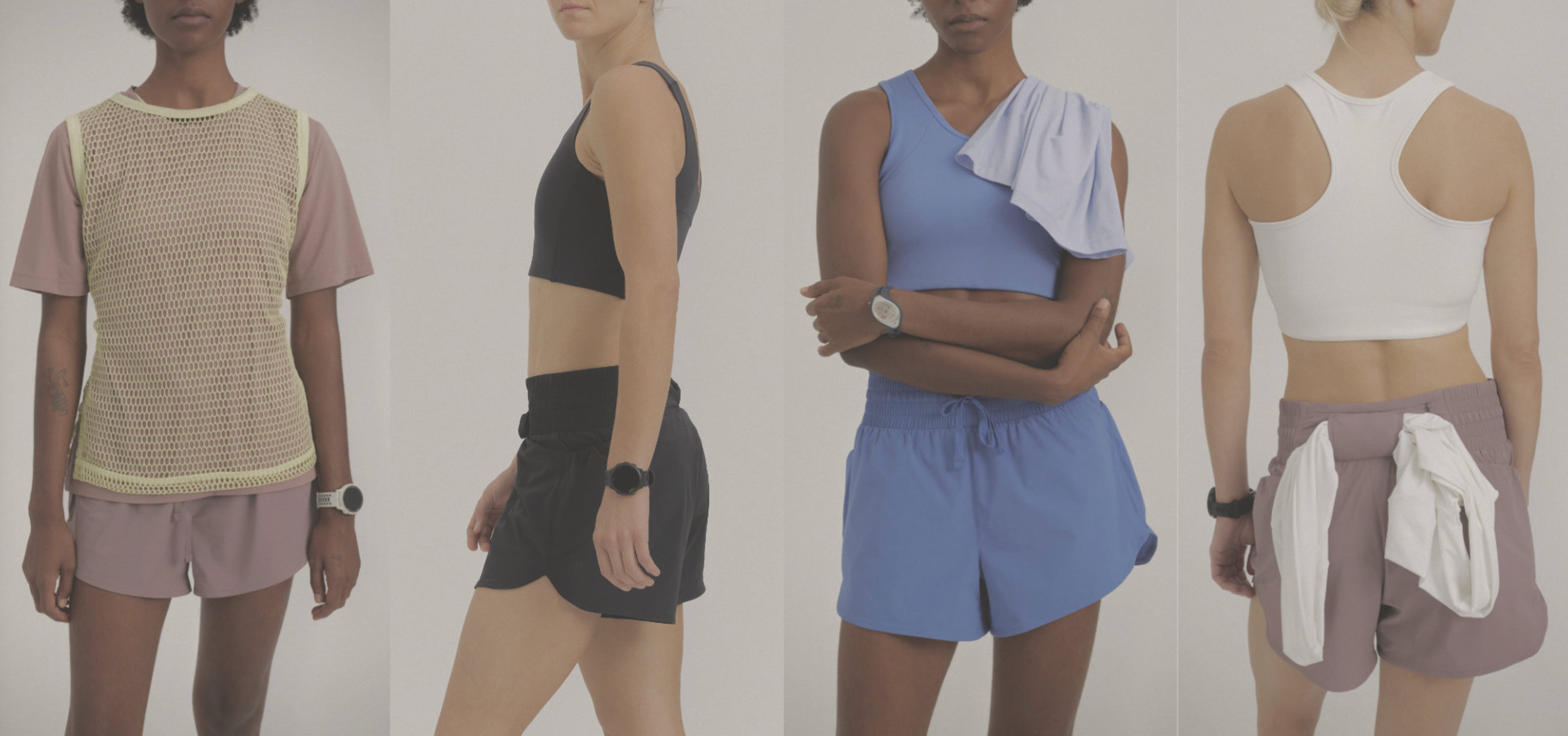
Cole: I was drawn to the brand. The first thing I ever saw was that open mesh tank. It was one of the first times where I’m like, this is cool, this is different and I actually want to wear this women’s item. It has some femininity coming through it without it being literal floral patterns or hot pink, which is fine, people love that. But also it’s nice to have something that’s showing restraint.
Was that your hero item? Was that your most popular piece, the mesh singlet? Tell me a little bit more about that.
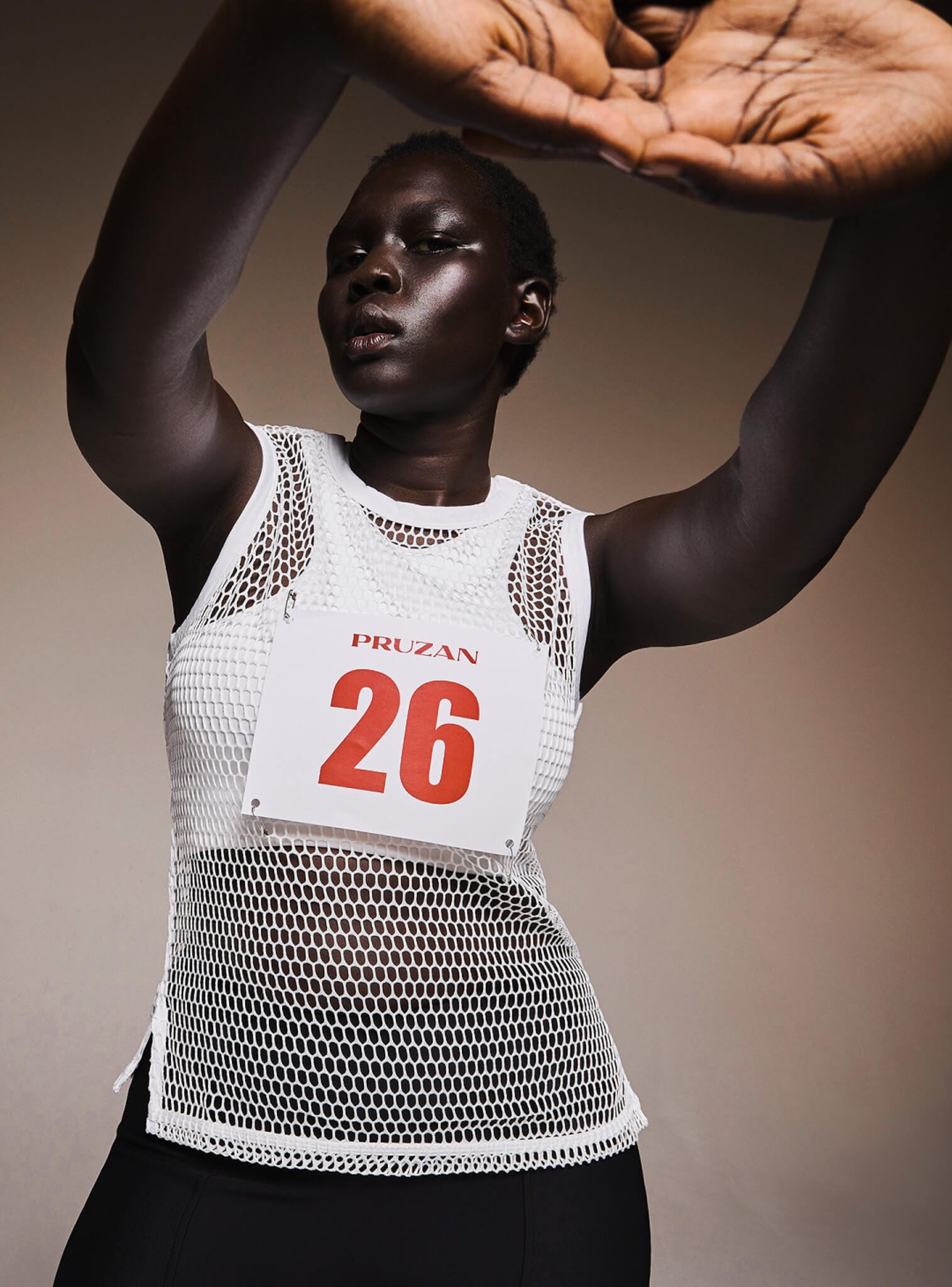
Jessie: Yeah! Oh my gosh. I love the mesh. The mesh was the unlock of what this wardrobe could look like. If you’re paying attention and following the brand, you will get the sense about layering being a big value, the way the pieces come together and the ambition and idea with wearing them. That’s gonna keep coming season after season. We’re working on spring, summer 27 and autumn, winter 27 right now. That’s going to be a big forever theme.
In the typical fashion world, layering is this unlock. It’s how you show off personality, combine pieces, and provide silhouettes. It felt like, this is such a fun opportunity. What if it’s channeling this layering system and how these pieces could come together.
The mesh was combining the idea of: we should make a layering piece that’s technical. This is an inspiration that keeps coming up for us, these health vests of the mid-century. Before we had technical fabrics, they put holes in things, they knit stuff with open weaves and crocheted it. We love the visual of that, but then also the attitude of, okay, you can pull together this layered look. You can have this really strong self-expression.
The mesh isn’t for everyone, but it is for some people and they love it. I love it. It’s such a fun way to have this attitude on your run. The ability to layer it over our t-shirts, which you’ll also see in the upcoming campaign — when we did the new e-comm styling we put the original mesh over the new t-shirts we made. It’s this unlock of both the interesting layering silhouette piece — the back, you can cinch it tighter or bigger — but also bringing in this archival sports rep. The playfulness of, hey, we do have all this technology that we make stuff with now, but remember when people were just putting some holes in or weaving something a bit bigger so that airflow could happen. It’s such a nod in that way.
Cole: I want to comment on the singlet first. One of the things about it is, many new brands come on the scene and they come out with a pair of socks or a t-shirt or what’s effectively merch. It’s not really a brand. It is merch.
When you brought Pruzan to market, you had real stuff already. You had a piece that was unique, that no one else is doing. That’s how I distinguish if a brand is for real or not early on — if they have their own take on something that is truly unique, as opposed to, we have some technical shirts and some shorts in earth tones. If it looks like everything else, I’m like, okay, we’ll see where this brand is in two to three years. But clearly, really early on, there was a vision for Pruzan. What’s your design philosophy and what has influenced the line?


Jessie: That is such a good question. I do not have a concise answer for design philosophy, but let me try and weave together some thinking. I want to play with elements from the fashion world in this running context because I am so bored of really massive baggy long sleeve t-shirts and just tight shorts being an option.
I’d been running for a really long time and the silhouettes hadn’t changed. They were the same. Part of what I’ve enjoyed so much about personal style is really being able to express myself. I love wearing baggier pants. It feels really authentic to me. This super tight all over or baggy all over — I just wanted there to be more playfulness.
There is the sense of borrowing from the fashion world from that creativity perspective, that expression, but then how amazing would it be if all that stuff was in these incredible performance fabrics? That’s really what we’re marrying it with.
I train for marathons. I run marathons. And I felt so frustrated by not being able to do the training I wanted to do. Moving with this new collection and moving forward, there’s this bare minimum with performance that we’re going to be hitting, which is: this is going to work for big challenges.
Pruzan moving forward — performance will always be ready for what you need to push it for. Whether you are on that racing journey or you’re more, I was joking, calling my version of trail running a nature opportunist version of trail running.
Cole: Speaking of the new collection coming out — the brand was dormant for a bit. Not dead, but there wasn’t a ton of new product. It was chugging along. What was going on during that time?
Jessie: It took a lot. To be super practical, we needed to sell stuff. We needed to have that return on what we had purchased. We also just did not have a good supply chain figured out. You need a great supply chain that’s really thoughtful to how you want to run your business.
Something that’s been a shift for us is when we started, we were like, D2C, that’s how we’re going to do it. That’s really evolved since then. Now I love our boutique partners and I’m really interested in wholesale. Less of this D2C at all costs attitude. Our people wanted to touch and feel our brand in person. That’s been a key theme throughout the entire time of being around.
A friend actually said this to me: Pruzan has lived many lives in the experience of not releasing stuff. That’s been so cool. Working with my co-founder Lexy, it’s been really great to have this practice of, so many people don’t know who we are. There’s a bit of freedom in that, to tinker, tailor it, and test things a bit. But then also to really practice reiterating and standing behind saying the same things over and over again. When you’re a brand and you’re reading the same line about a classic bra for the tenth time, you’re like, oh my gosh. But you need to constantly be explaining who you are and what you are to the customer and to the community.
Cole: That is so important because brands do not do it enough. A lot of the times it’s the first time someone’s seeing your brand and you feel like we’re saying it too often. You probably aren’t. Unless you’re getting a million people unsubscribing from your email list, you are probably not saying it too often.
Jessie: I wouldn’t tell someone to do that exact process of what we did. I wouldn’t say launch and then don’t put anything really new out for almost three years. I don’t know if I would give that advice. But you learn a lot more when you don’t have all the resources. You have to be creative.
Cole: And now, I’m sure it is fun to develop new pieces. You’ve probably been looking to get a full line out for a while. What’s the focus of it?
Jessie: The new line is all new fabrics and updates on our favorite bras and shorts, as well as some new products. We took three years of feedback. People wanted a more supportive bra, and I think that really lines up with who we are as a brand. At TRE, there was a lot of interest in support. A lot of buyers came up asking for supportive bras. So clearly there’s appetite in the market.
The bras have increased support. We brought in really exceptional fabrics that we love. What’s really unique about the fabrics is that there’s this lexicon of techiness that exists that could be described as more masculine — quite shiny, sometimes even a bit scratchy, these performance materials. That is not what you’re gonna find with Pruzan. These are soft and supple, but they also have texture to them. The bras have this almost chalkiness to the knit that’s really beautiful.
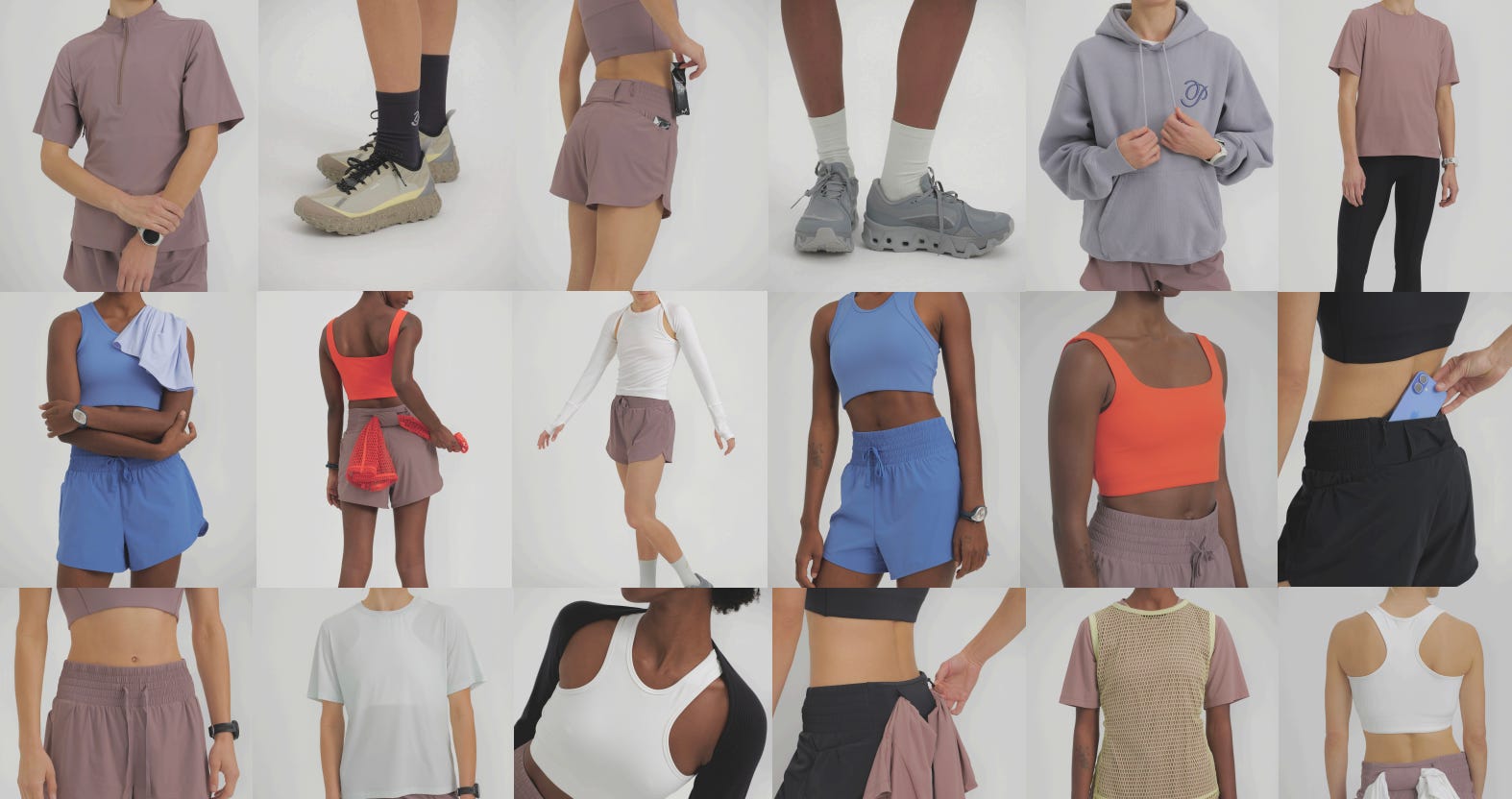
We’ve updated the Hourglass and the Classic into more enhanced versions. We gave our Curved Marathon Shorts a round of improvements as well, so they’re now just the Marathon Shorts. They have amazing pockets. We added stash pockets on the side so you can have tons of gels. We improved the ability to easily take your phone in and out with this pull-through tab. More pockets on the interior. You can bring so much with you, but you’re not gonna look like you’re packing cargo.
Cole: Will you be doing any traditional bra sizing, or will it still be normal top sizes, as opposed to, okay, we have a 32C?
Jessie: I would love to. That would be a really great partnership to work with an actual bra manufacturer or a bigger brand who would want to partner and bring that to life, because it is really important. There’s a level of support that just doing the bras the way we’re doing, we’re not getting there. We’re not doing encapsulation. We don’t have underwire.
I’m not going to call them high support because to be high support you do have to go into that territory. But they have a better system. We have this beautiful outer knit. We have a power mesh on the inside and then we lined it with our airlight t-shirt fabric. We put cups in there that you can move. The waistband is really strong and supportive. All those five things came together to make a much more supportive bra. It’s not an underwire bra, but compared to what we had before, I think it’s really great product.
Cole: Not many running brands have gone super deep on bras. Oiselle being one of them, which makes sense — they’re a women’s-founded brand. Bandit’s done a pretty good job with their tops, and that’s because they have a woman at the head of design. That is the trend with people actually caring about how the bras fit, how they perform. It’s definitely an underserved market. I’ve had friends who come back from long runs and they just have chafe along the waistband of the bra, which is horrible.
The one thing I’m jealous of on the bras is the phone carrying pocket down the back. That’s a smart idea. Putting a phone in my pockets or in a pair of half tights, at least it’s along my thigh, but if it were closer to center of mass, I wouldn’t notice it.
Jessie: We don’t have that feature in this next collection, but we are talking about it for the next bras we’re working on.
Cole: It sounds like the marathon shorts kind of cross that off though. I think more people would prefer a better fitting bra than one that necessarily has a pocket on it.
Jessie: That’s exactly the space that I’m excited to play in. I really enjoy seeing it from some of the other brands — Oiselle and Bandit and stuff. That innovation on the women’s side has been so sorely missing. It’s exciting to have better product for women. I really believe we’re making products that are enhancing that experience and making people feel more like themselves and feel comfortable and prepared and ready.
That was one of the really nice parts about TRE — the appetite was so there for women’s innovation and seeing more stuff show up on that side.
Cole: Tell me about your designer. How have you built up your design team and who works on what?
Jessie: The whole original collection was designed by us. We work with this designer who is amazing and such a key part of the team. Her experience working at Arc’teryx has really leveled up the fabrics we have access to, the way things are constructed. Lexy and I, I love what we created, and for people who weren’t apparel people, it’s great to see what we were able to do. But to get where we want to go as a brand, this designer has really unlocked new territory.
It’s been incredible because, like you Cole, I’m also a product and fabric nerd. I’m just a product person in general. Being able to work with someone who has such expertise — at one point she had a winter jacket brand that she made, jackets for expeditions to the Arctic. The level of making things for purpose and expertise is really there. She’s been an amazing additional creative partner. The team is tiny. It’s really not a big operation. I enjoy when people are surprised to hear that.
She has been a part of the entire journey of creating the collection that’s coming out. We’ve been working together for at least two years.
Cole: So the collection has very much leveled up because you’re working with a pro now. Not to say your stuff before wasn’t good, but it’s hard to do that stuff.
Jessie: Anytime I meet another founder of a running brand — it’s a really great community of people, I’ve loved meeting anyone — the first thing we’re chatting about is, how do you produce? Who do you work with and where? It’s such a big part of it. Anyone who wants to get into creating a running brand, the supply chain is so key. Knowing how you’re going to make really great stuff is so key. As a world, we don’t need more crap. If we’re going to make stuff, we need it to be better.
Thank you for your time listening or reading! To follow along with what Jessie, Lexy, and Pruzan are up to


